
Test field-service billing from the completed job
Follow a completed service job to its draft bill. Test included materials, approved extras, warehouse records, corrections and the office handoff.
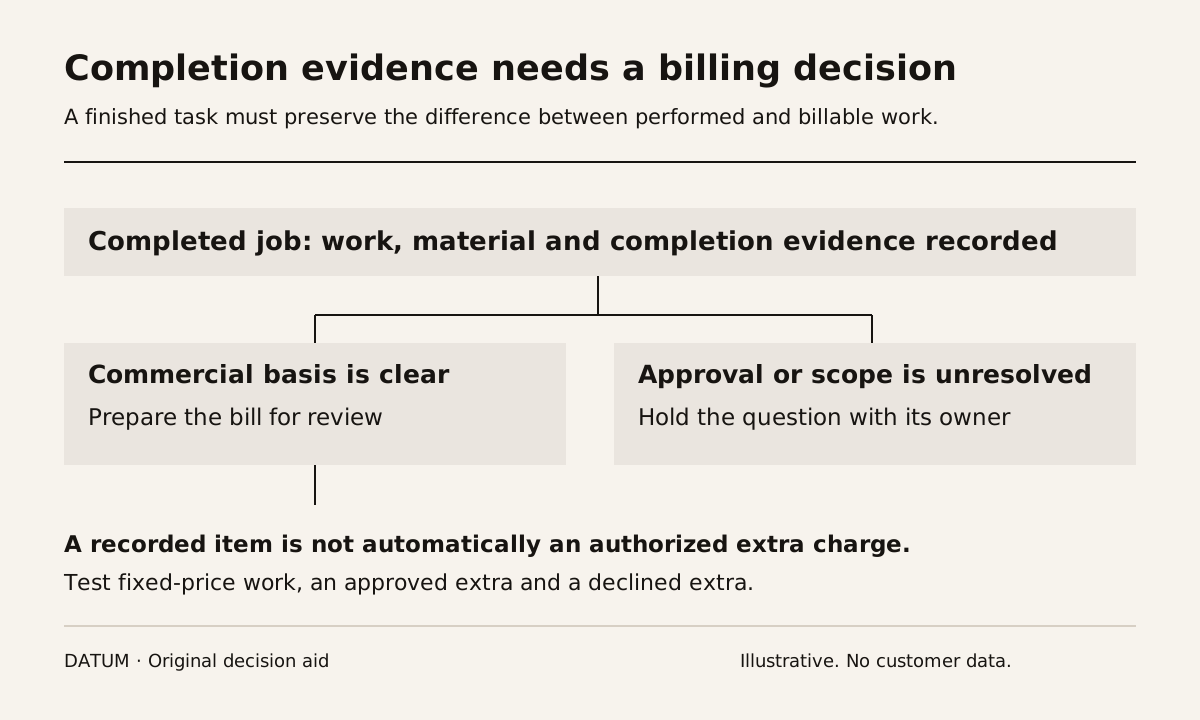
A completed service job should give the office enough evidence to prepare the correct bill without reconstructing the visit. Test that handoff before choosing field-service invoicing software. The key question is whether the proposed setup distinguishes work performed, work approved and work billable under the agreed commercial terms.
Those categories can overlap without being identical. A technician may use material included in a fixed price. An extra repair may be recorded but still await approval. A return visit may be operationally necessary without creating another charge. The software demonstration should include these distinctions.
Odoo 19 Field Service documents a product catalog enabled through Time and Material Invoicing and a default warehouse used for products recorded on tasks. That is a useful capability to test, but it does not determine whether every recorded item is chargeable on every job. Odoo 19 Field Service product management.
Define what “ready for billing” means
Choose a representative job and ask the billing person what must be present before they can prepare its bill. Avoid making every field mandatory merely because it exists. The evidence should resolve a real billing or operational question.
| Evidence | Question it answers | Owner of a missing answer |
|---|---|---|
| Approved scope and price basis | What did the customer authorize? | Person authorized to agree the work |
| Completion record | What work was finished, and what remains? | Technician or service lead |
| Material and labor details | What was used or performed? | Person who recorded the work |
| Approved extras | Which changes may be charged? | Commercial decision owner |
| Customer and billing details | Who should receive the bill? | Office record owner |
| Prior invoice or deposit references | What has already been billed or collected? | Billing reviewer |
Use the Field Service worksheet guide to decide which observations belong in the technician's task. Keep commercial decisions with the person authorized to make them. A technician's note can provide evidence without silently authorizing an extra charge.
Run a fixed-price case and a changed-scope case
Consider a fictional service company replacing a pump for an agreed fixed price. The technician records the replacement and a small fitting included in the job. The expected bill should follow the approved scope. The test fails if ordinary material recording unexpectedly adds an unapproved charge.
Now introduce a second problem discovered during the visit. Record it as a proposed extra, with a clear decision state. Test both outcomes: the customer authorizes the extra, or the extra is declined. Ask the office to prepare the draft bill in each case using only the saved records.
These are proposed acceptance tests, not assertions about Odoo's default fixed-price or approval behavior. Ask the implementer to identify the configuration, product invoicing policies and any extension required to achieve them. Preserve the evidence showing how the charge was included or excluded.
Check the office readback
The technician should finish the task on the device and account intended for daily use. Then a different person in the office should inspect the saved outcome. The real-device Field Service test covers the practical interruptions that a desktop demonstration can miss.
Ask the billing reviewer to identify the job, approved extras, quantities, prior billing and unresolved questions. If they must call the technician to explain a field, note exactly what was ambiguous. That may require a clearer field, a different workflow rule or a short instruction. It does not automatically require another application.
For Odoo, include the warehouse in this readback. The product-management documentation ties task products to the user's default warehouse and describes stock updates when the task is marked done. Verify that the selected warehouse matches how the team actually holds and replenishes material. Odoo Field Service warehouse behavior.
Prove corrections and duplicate prevention
Before approving the workflow, repeat the handoff and see whether the office can tell that the job has already been billed. Then correct a material quantity or withdraw an extra before the bill is finalized. The proposed system should make the changed evidence and required next action understandable to the reviewer.
If the bill has already been issued, involve the person responsible for accounting to define the appropriate correction procedure. This exercise does not prescribe credit, tax or revenue treatment.
Keep a small acceptance record for each scenario: approved scope, saved field evidence, resulting draft, unexplained differences and reviewer decision. The normal case should produce the expected bill. The exception case should either produce the agreed result or stop with a visible owner. A job marked complete while its billing questions disappear into a private message has not passed the handoff test.