
Odoo vs NetSuite: test the proposed implementation
Compare Odoo and NetSuite through common operating scenarios. Check the proposed configuration, exceptions, delivery responsibilities and unfinished work.
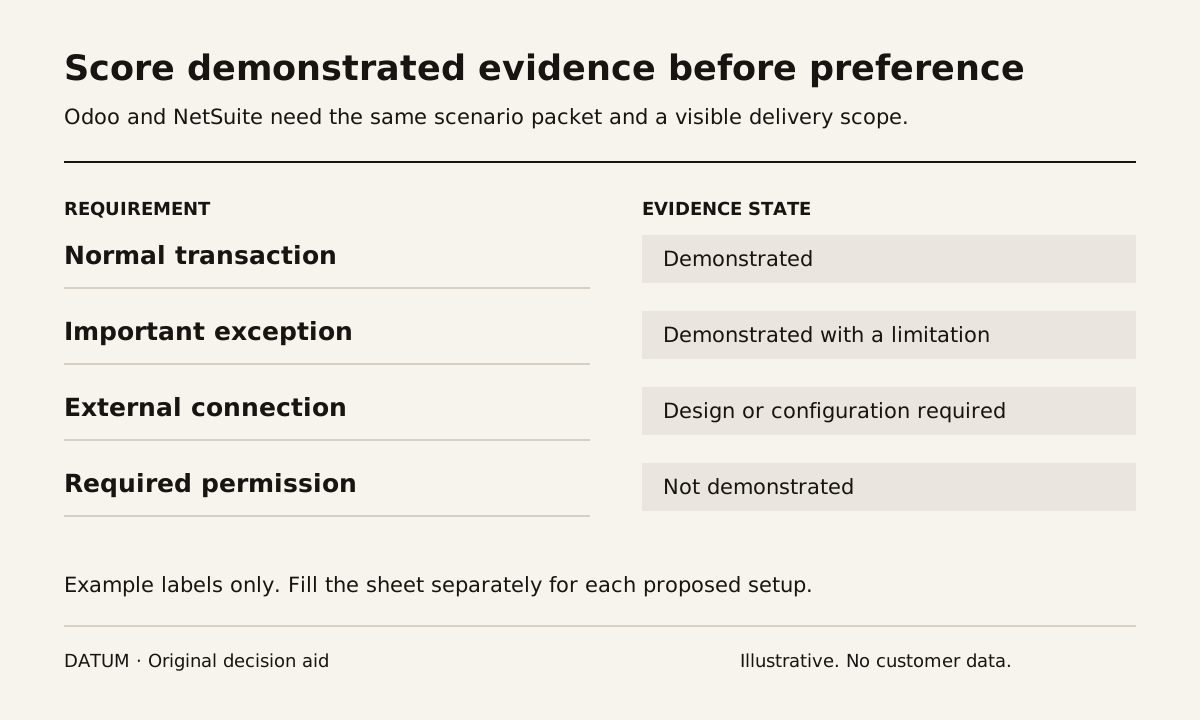
Compare Odoo and NetSuite by asking each proposed implementation to complete the same business scenarios. Keep the product configuration, implementation services and unfinished work visible. A broad feature category on a website is the start of a question, not the end of the selection process.
NetSuite presents ERP capabilities across accounting, orders, inventory, projects, production and warehouse operations. Its pricing explanation distinguishes the core platform, optional modules, users and initial implementation. Odoo's public offering also requires attention to the selected plan and hosting arrangement. These are different commercial structures to examine in an actual proposal, not a basis for declaring one universally cheaper. NetSuite ERP and Odoo plans.
Agree on the business boundary first
Write down the companies, countries, locations and user roles in scope. Add the operating workflows, interfaces and historical records that must be included. If a requirement remains uncertain, label it as a discovery question rather than giving one vendor credit for an imagined answer.
For example, “multiple companies” is too vague for a useful demonstration. Describe which company sells, which holds inventory, who may see each record and what the finance team needs to review. Have the relevant advisers evaluate local and accounting requirements; this article does not establish either product's suitability for a particular jurisdiction.
The implementation statement-of-work guide helps translate those boundaries into deliverables and exclusions. Use the same boundary when comparing the two proposals.
Give both teams the same scenario packet
Create a small packet with permitted or fictional records, the starting conditions and the result the operator must achieve. Include a normal transaction and an exception that exposes an important dependency.
| Scenario | What the demonstration must establish | Evidence to retain |
|---|---|---|
| Customer changes an accepted order | Who can approve the change and how operations sees it | Original requirement, revision and downstream result |
| Only part of a purchase arrives | What remains open and who acts next | Receipt, outstanding quantity and next action |
| A product or service is delivered in parts | How ordered, completed and billed states remain distinct | Linked records and explained differences |
| A user lacks permission | How the intended role is limited | Result under that user's actual access |
| An external transfer fails | How the error is noticed, corrected and retried | Failure evidence and duplicate check |
| A record needs correction | How the team preserves context and repairs the outcome | Original record, correction and review trail |
Let each team use its own sensible process to reach the result. A fair comparison does not demand that one system reproduce the other's screens. It does require the presenter to explain any manual work, additional application or unbuilt extension needed to complete the case.
Score evidence before preferences
For every requirement, use a written evidence state: demonstrated in the proposed setup; demonstrated with a limitation; design or configuration still required; or not demonstrated. Keep usability observations in a separate column. A pleasant screen can still leave a required step unfinished.
If the team proposes custom code, ask who will maintain it, how upgrades will be tested and what happens when its owner is unavailable. Odoo's hosting choice matters here: Online does not allow custom Python server code, while Odoo 19 documents importable XML/data modules as a separate approach. Classify the proposed extension and confirm its deployment conditions before comparing delivery scope. Odoo 19 importable modules.
For any proposed NetSuite module, integration or service, ask for its exact inclusion in the quotation and the demonstration environment. Do the same for Odoo. Do not infer that a capability shown on a vendor's general website is included in the offered scope.
Compare the implementation you will actually receive
Request a responsibility map covering process decisions, data cleanup, migration rehearsals, configuration, interfaces, testing, training and post-launch support. Identify internal staff work as well as supplier work. Two prices are difficult to compare when one assumes the customer supplies clean data and the other includes substantial preparation.
The Odoo implementation cost worksheet separates these work components. It can be used as a neutral comparison aid without assuming that both suppliers package services in the same way.
Evaluate the delivery team alongside the product. Use the partner selection scorecard to ask who will perform the work, how unresolved decisions are handled and what acceptance evidence is required. Adapt the questions to each supplier without implying a DATUM affiliation or certification.
Finish with a decision record that identifies the tested configuration, strongest fit, material limitations, remaining discovery and accountable owners. A winner chosen before those limitations are visible is difficult to defend. A decision supported by completed scenarios and an understood delivery scope gives the team a concrete basis for the work that follows.