
Check the inputs before trusting an Odoo manufacturing schedule
Test demand, material, operation times and work-center availability before trusting a manufacturing schedule. Use one order and a planning input ledger.
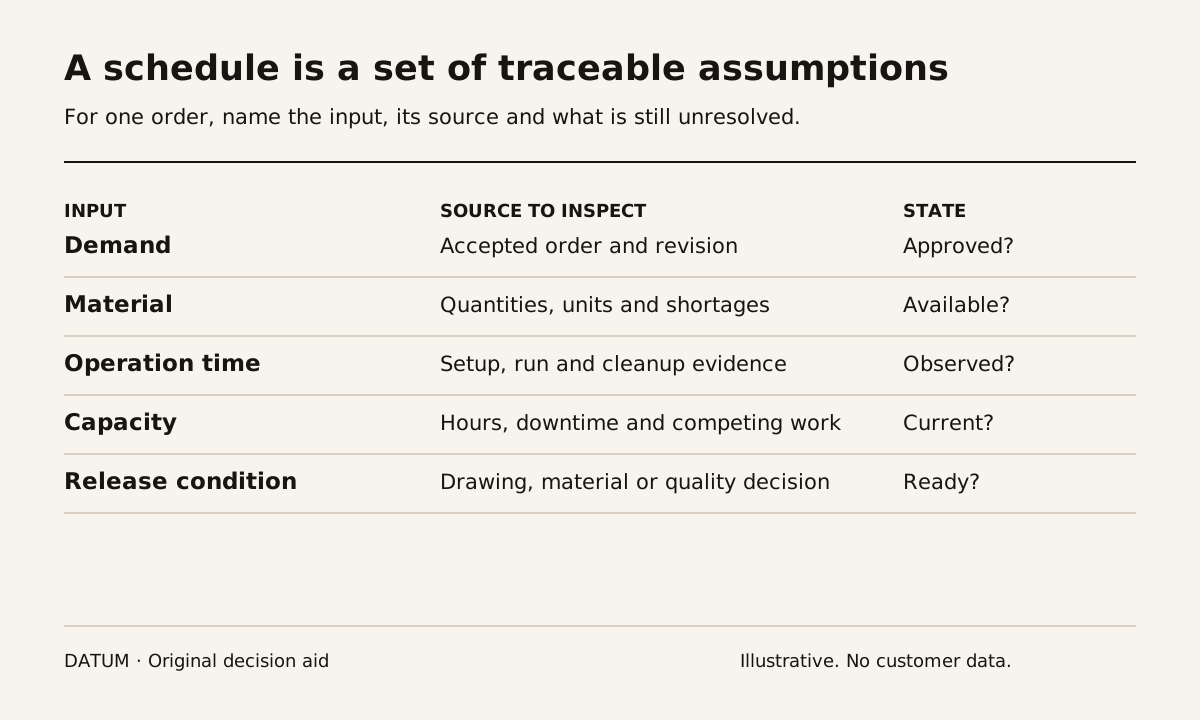
A manufacturing schedule becomes useful when the planner can explain the demand, material, operation times and available capacity behind it. Start by checking those inputs for one representative order. Moving blocks on a calendar will not correct a missing component or an operation assigned to unavailable equipment.
Odoo 19 work centers include working hours, time efficiency, setup and cleanup times, alternative work centers and product capacities. Work orders reference work centers through the operations on a bill of materials. These are concrete inputs to inspect, rather than assumptions to hide inside a promised finish date. Odoo 19 work center documentation.
This guide proposes a planning acceptance exercise. It does not establish that a particular Odoo database, add-on or shop-floor configuration already produces a feasible schedule.
Build an input ledger for one order
Choose an order your production supervisor recognizes. Use a test copy or a fictional equivalent with the same kinds of dependencies. Record the source and owner of each input below.
| Planning input | What to inspect | Evidence to keep |
|---|---|---|
| Required output | Product, quantity, revision and requested date | Accepted order reference |
| Components | Required quantities, units and permitted substitutions | Approved bill of materials and unresolved shortages |
| Operations | Sequence and the work center for each operation | Routing reviewed by the supervisor |
| Time | Setup, run and cleanup assumptions | Source of the assumption and a comparable observed run |
| Availability | Working hours, planned downtime and competing work | Current work-center calendar |
| Release conditions | Material, drawing or quality approval needed before starting | Named person who confirms readiness |
A value can be present without being credible. Label it observed, estimated or unresolved. For example, a standard operation time copied from an old spreadsheet may be a reasonable starting estimate, but it should remain identifiable until someone compares it with a representative run.
If your product or location records are still being migrated, use the migration rehearsal checks before relying on the schedule's inputs. A correct-looking plan built from duplicate products is not a reliable baseline.
Challenge the schedule with one missing condition
Consider a fictional fabrication order that must pass through cutting and finishing. The cutting machine is available tomorrow. The drawing revision is still awaiting approval. A calendar that shows an open cutting slot answers a capacity question; it does not answer whether the order is authorized to start.
Give the planner two copies of the test scenario. In the first, the drawing is approved. In the second, it is not. Ask the team to demonstrate how the difference is represented and who can release the order. This is a proposed business rule to prove in the chosen configuration, not a claim about an automatic Odoo drawing-approval feature.
Then change one other input at a time: reduce available hours, delay a component, or make the usual work center unavailable. Record the resulting plan and the explanation. A changed finish date without a traceable cause is difficult for a supervisor to trust.
Distinguish machine capacity from permission to use it
The work-center settings include both production capacity and allowed employees. Do not turn those fields into an unsupported promise that every staffing constraint has been solved. Verify the actual behavior your shop needs, especially when an operation requires a qualified person, shared tooling or an outside process. Odoo's work center settings.
Ask the supervisor to name a physically impossible plan. Perhaps the same fixture cannot support two jobs at once, although they use different machines. Include that case in the demonstration. If the proposed system does not represent the constraint, document the manual release check and its owner. Decide whether that arrangement is acceptable before promising automatic planning.
Make the first planning review a comparison
Keep the original assumptions and compare them with the completed test or authorized pilot. Did the sequence hold? Which operation waited? Was the delay caused by material, an approval, availability or an inaccurate duration? Change the input that explains the difference and rerun the affected case.
Do not label all waiting time as operator inefficiency. The purpose of this first review is to understand the record and the rule, not to manufacture a performance score.
The implementation timeline guide uses the same dependency logic for the project itself. For manufacturing, finish the exercise with a short readiness statement: the planner can trace this order's scheduled path to approved demand, identified material and reviewed capacity assumptions. List unresolved constraints beside that statement so the next person knows where judgment is still required.